Gunmetal Powder: The Alchemy of Pain
I had a strange dream recently in which I found myself helping people who were coming to me for healing. Dreams have always fascinated me because of the way the unconscious communicates through images that often make very little sense to the rational mind and yet carry an unmistakable feeling of significance. Sometimes I wake from a dream and remember almost nothing. Other times, a particular place, person, object, or phrase follows me into waking consciousness with such intensity that I know there is something within it asking to be explored.
This dream contained one of those moments.
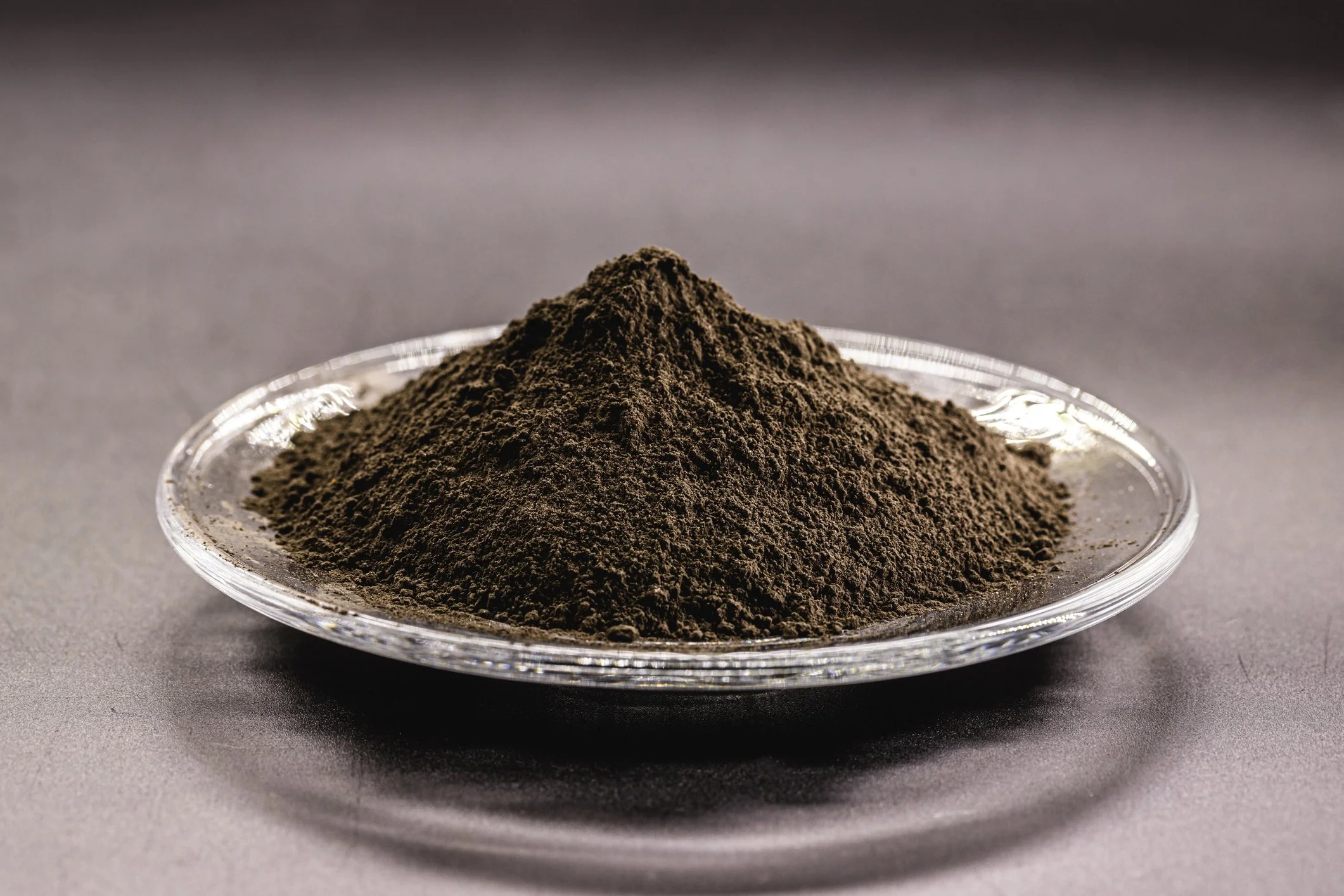
A man had come to me in a state of tremendous distress. He was overwhelmed by what was happening in the world and seemed consumed by fear, power, and forces he believed were operating around him. I found myself gathering herbs and remedies for him, completely comfortable in the role of healer, but there was one particular substance I became strangely insistent that he take.
Gunmetal powder.
I remember the certainty more than anything else. There was no questioning whether this was the correct medicine. Within the strange logic of the dream, I simply knew that gunmetal powder was what he needed.
When I woke, the phrase remained with me. I kept turning it over in my mind because I had no conscious association with anything called gunmetal powder. I had not been studying it, talking about it, or thinking about it before going to sleep. As far as I knew, it was not even a medicine that existed. Yet my unconscious had created the phrase with enough force that it survived the transition from dreaming into waking consciousness.
I began wondering what the dream might be showing me.
One of the ideas I have explored throughout my work is that consciousness requires reflection in order to see itself clearly. We encounter these mirrors through relationships, emotional reactions, patterns, dreams, the body, spiritual practice, creativity, and the stories we repeatedly tell about our lives. The surface experience is rarely the whole experience. When something carries an unusual emotional charge, there is often another layer beneath it waiting to become conscious.
Dreams may be one of our oldest mirrors.
They speak in a language that is less concerned with logic than symbolism, and when I began looking at the phrase gunmetal powder symbolically rather than literally, something extraordinary started to emerge.
A gun is an instrument capable of wounding. It represents concentrated force, protection, aggression, fear, power, violence, and the possibility of destruction. Metal is something extracted from the earth and transformed through heat. It is forged, tempered, shaped, and strengthened through fire. Powder is what remains when something solid has been broken apart so completely that it can no longer retain its original form.
Together, these images created a meaning I had not initially seen.
Gunmetal powder was the weapon after it had been dismantled.
Something that once possessed the ability to wound had been broken down until it could no longer function in the same way. The original material still existed, but its form had fundamentally changed. In my dream, this transformed substance was no longer being used as a weapon.
It had become medicine.
The realization immediately brought me back to the ancient language of alchemy. Although we often reduce alchemy to the mystical pursuit of turning base metals into gold, its symbolism has always carried a deeper spiritual meaning. Alchemy is fundamentally concerned with transformation. The original material is not discarded because it is imperfect or undesirable. It enters a process through which its form, function, and meaning are changed.
I began wondering whether human healing works in much the same way.
We accumulate difficult material throughout our lives. Grief, betrayal, abandonment, failure, heartbreak, rejection, shame, illness, disappointment, trauma, and the countless experiences that divide our lives into the person we were before something happened and the person we became afterward. Some of these experiences are integrated relatively easily, while others remain sharp inside of us for years. We may intellectually understand what happened and still discover that some part of the experience remains active beneath the surface.
Healing is often described as though our goal should be to release this material completely. We speak about letting go, moving on, forgiving, surrendering, and leaving the past behind. There can certainly be wisdom in all of those practices, but I have increasingly come to believe that transformation is more complex than simply releasing what has hurt us.
Sometimes we are not meant to throw the material away.
Sometimes we are meant to change its form.
This distinction matters because spiritual language can become another way of abandoning ourselves when we use it to rush past the reality of suffering. I do not believe that everything painful happens for a reason, nor do I believe we need to become grateful for the experiences that wounded us in order to heal from them. There are losses that remain losses. There are betrayals that should never have happened. There are experiences we would never consciously choose again.
Alchemy does not require us to pretend the original material was gold.
It asks whether transformation is still possible.
There is a profound shift that occurs when we stop asking only, Why did this happen to me? and begin asking, What has this experience become within me? What did it teach me about myself? What did it reveal about the way I love, attach, protect, abandon, trust, control, survive, or search for meaning? What became stronger through the fire, and what became hardened? What am I still carrying in its original form because I have never considered that I might be able to transform it into something else?
These questions do not romanticize suffering. They return agency to us.
We cannot always choose the material life gives us, but we can participate consciously in what that material becomes.
This is where I believe pain begins to enter the alchemical process. The experience itself does not change, but our relationship to it does. Betrayal may eventually develop into discernment. Abandonment may teach us how to remain connected to ourselves. Failure may become humility, wisdom, or a willingness to begin again. Grief may deepen our capacity for tenderness. Anger may reveal a boundary we have repeatedly failed to honor. An ending may force us to discover an identity that could never have emerged while we were still trying to preserve the life that existed before it.
None of this happens quickly, and none of it happens simply because we decide to think positively about what occurred. Real transformation requires that we remain with the material long enough to understand it. We have to become willing to witness what the experience created within us without immediately judging, suppressing, spiritualizing, or identifying completely with it.
This is where the metaphor of the metal becomes especially powerful for me.
Metal is transformed through fire, but fire alone does not create something useful. The material must also be worked. It is heated, hammered, cooled, reheated, reshaped, and tempered. The process changes its structure. In many ways, this resembles the repetitive nature of healing itself. We encounter the same wound in different relationships, different circumstances, and different stages of our lives, often wondering why something we believed we had already healed has returned.
Perhaps it has not returned because we failed.
Perhaps we are encountering the material at another temperature.
There may be another layer ready to be worked.
Eventually, if we stay conscious enough within this process, something that once existed only as suffering can begin to develop another function. The person who survived abandonment may become exquisitely capable of recognizing when others are disappearing from themselves. The person who lived through profound grief may develop the capacity to sit beside another person's sorrow without trying to fix it. The person who spent years abandoning their own truth may eventually become someone who teaches others how to remain connected to themselves.
The artist turns heartbreak into music. The writer turns experience into language. The teacher transforms failure into wisdom that can shorten someone else's learning curve. The healer develops compassion not because suffering made them superior, but because they have traveled through territories they can now recognize when another person arrives there.
This does not mean the wound was secretly a gift.
It means we became capable of making something from it.
There is an important difference.
I have always been interested in the relationship between lived experience and spiritual understanding because so much of what eventually becomes wisdom begins as something we would never have chosen. We often imagine our spiritual lives being formed through meditation, prayer, study, ritual, pilgrimage, or moments of transcendence, and certainly they are. But some of our deepest spiritual development occurs through the ordinary and sometimes devastating experiences that force us into relationship with parts of ourselves we might otherwise never encounter.
The question becomes whether we remain identified with the wound or eventually become conscious enough to work with the material it left behind.
For me, this is where gunmetal powder becomes more than an interesting dream symbol.
The weapon represents the original form of the pain: something capable of continuing to wound. Sometimes we carry those weapons for decades without realizing it. We carry them through the stories we tell about ourselves, through our defenses, through the relationships we unconsciously recreate, through the ways we anticipate abandonment or betrayal before they occur, and through identities organized around experiences that have technically ended but remain psychologically alive.
We may no longer be standing in the original fire, but we are still carrying the metal.
Alchemy begins when we become conscious of what we are carrying.
The goal is not to erase the past or return ourselves to some imagined state of innocence that existed before life happened to us. Some experiences permanently alter us. There are versions of ourselves we cannot return to, and perhaps healing asks us to stop trying.
Instead, we can ask whether the material is ready to take another form.
Can the anger become clarity without losing its truth? Can grief deepen love without requiring us to stop missing what was lost? Can the wound become wisdom without pretending we are grateful for being wounded? Can an experience that once held enormous power over our identity become something we consciously use in service to another human being?
Can the weapon become medicine?
As I continued reflecting on the dream, I realized that perhaps the most important detail was not the strange substance itself but my certainty about it. My dreaming self did not hesitate. She knew exactly what medicine was needed.
At first, I assumed I had dreamed about healing someone else.
Now I am not so sure.
Perhaps the prescription was also meant for me.
There are experiences in every life that cannot be undone, and healing does not give us the power to rewrite history. What it can give us is a different relationship with the material history leaves behind. We can learn to recognize what remains sharp, what has hardened, what still carries the capacity to wound, and what is finally ready to enter the fire again.
This may be one of the quieter mysteries of spiritual transformation. We do not become whole because nothing painful ever happened to us. We become more whole as we learn how to remain conscious within the process of becoming, allowing even the difficult material of our lives to be examined, integrated, reshaped, and eventually embodied differently.
The alchemists searched for a way to transform base metal into gold.
Perhaps our version of that ancient work is more intimate.
We take what wounded us and refuse to let the wound have the final word.
We take what once existed as fear, grief, rage, heartbreak, or loss and slowly change our relationship to it until something new becomes possible. Not because suffering was necessary. Not because pain was secretly sacred. But because consciousness gives us the capacity to participate in what happens next.
The past remains true.
The loss remains real.
The metal remains metal.
But it no longer has to remain a weapon.
Sometimes, with enough awareness, fire, patience, and willingness to work with what life has given us, even the things that once wounded us can be ground into medicine.
Perhaps that is the real philosopher's stone.
Perhaps that is how we turn pain into gold.